

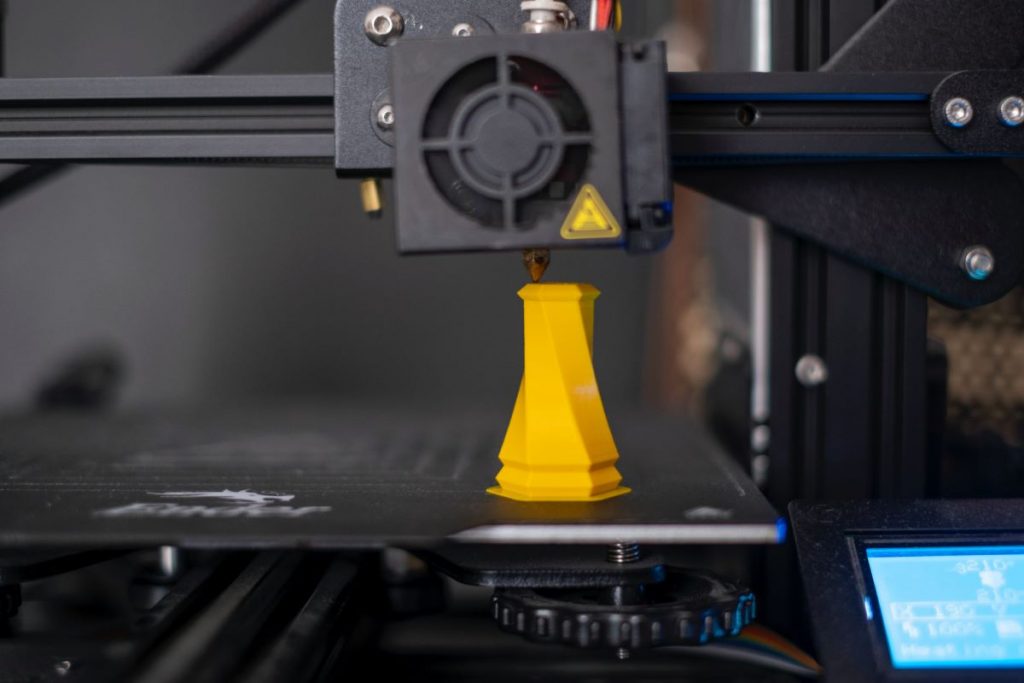

While 3D printers were once highly expensive, as technology has improved and materials become cheaper, they’ve become more accessible. This means what was once exclusive technology for top universities and private companies, is now available to more individuals. Some of the industries that utilise 3D printing include aerospace, automotive, fashion, medical, and education, but this is by no means a comprehensive list.
3D printers can have a lot of benefits over more conventional methods of production, including affordability, versatility and allowing for a more compact workspace. These are just some of the reasons for the increase in 3D printing popularity over the past decade or so. With so many different benefits, materials and applications, it’s easy to see why this technology is being used in a wide range of industries.
From excited students to backyard innovators, there are many people across the globe thrilled by 3D printing. If you’re one of these individuals, you might be wondering how does 3D printing work? In today’s article, we take a look at a brief history of 3D printing, along with how it works to give you more of an insight into this fun new technology. Keep reading to learn more!
History and development
3D printing has a history that stretches back a long way. The first 3D printer was developed in the 1990s at the Massachusetts Institute of Technology by a company called 3D Systems. Since these early days, the technology in 3D printers has continued to progress and improve.
However, the history of 3D printing innovation doesn’t begin in the 1990s. In the 80s, many companies were experimenting with an earlier form of additive manufacturing known as rapid prototyping (RP). RP was highly beneficial to manufacturers as it allowed them to produce prototypes at a much faster rate than usual. This marked a positive step forward in what would be the eventual evolution of the 3D printer we know and love today.
3D printing technology continues to advance. The recent improvements in accessibility, cost-effectiveness, and efficiency have enabled 3D printing to become more widespread for everyday users. This means that 3D printing as a hobby or as a profession is becoming more common.
How does a 3D printer work?
To put it simply, 3D printing works by using a process called additive manufacturing. This process adds layer upon layer of material to create an object from a 3D model. It starts with the 3D digital blueprint which is created using computer-aided design (CAD), and then the printer builds up the object one layer at a time. The materials being used in the 3D printing process can vary depending on the type of printer, and they can range from plastic filaments to metal powders. Generally, 3D printing at home involves using plastic filaments. This could be ABS plastic, PLA, Nylon or Polycarbonates.
Each layer is usually no more than 0.1 mm thick, meaning that this technology can create objects with fine details and intricate designs.
The specific steps involved in creating a 3D printed object are as follows:
Step 1
The initial step sees the object being virtually designed in a CAD file. There are several different types of CAD 3D modelling software, including Trimble or TurboCAD. Alternatively, you can use a 3D scanner instead of software. A 3D scanner will scan an existing object and create a digital file that can then be imported into your 3D modelling software.
Step 2
Now that the object exists in a digital format, the 3D modelling software will read the CAD data and slice the objects into hundreds or thousands or individual horizontal layers.
Step 3
Once sliced into enough layers, the object is then sent to the 3D printer to be printed out. The entire object is then created layer by layer as the plastic filament is fused together. Depending on the item, this could take between a few minutes up to a few days. The amount of time it takes to create an object will depend on its size and complexity.
3D printing is an incredibly versatile technology for both prototyping and personal projects. An object can be completed in a few simple steps and as such, the process is relatively easy to learn with a little bit of time and dedication.
Uses and applications of 3D printers
One fantastic thing about 3D printing is the number of applications and uses it offers. The fact that innovators can now manufacture their own products and prototypes rather than needing to contract with factories and plants around the world offers new accessibility opportunities.
There are many different applications for 3D printing, with lots of exciting possibilities. This includes:
Vehicle and transportation
Prototypes are frequently produced for different forms of transportation, including parts for cars and other vehicles. In fact, some non-prototype parts are starting to be printed for vehicles. Car accessories are also sometimes produced using 3D printing technology.
Aerospace
The aerospace industry has embraced 3D printing for a number of reasons. One large one is because it allows producers to create lightweight parts for planes. There are lots of different items that can be printed for the aerospace industry, including turbine components.
Medicine
This technology also has use within medical spaces. This could include printing of items such as dental and bodily implants. Due to the customised requirements for individual medical care, 3D printing can have many uses in this space. Already, many 3D printers on the market are able to print at such high resolutions which is necessary when dealing with the human body.
Tool and part building
3D printing can be used to build a number of different tools and parts. For example, using this method, you could create customised tools for a specific job or task, as well as create replacement parts for machinery. This can be particularly handy for those that work within the mechanical engineering industry.
Prototyping
3D printing can also be used to create product prototypes, which can then be tested before going into production. This technology is invaluable for companies looking to save costs as prototypes can be created in-house rather than being sent off to a separate organisation for production.
Education
3D printing can also be used within education to help students learn in a more hands-on way. This could include making physical models of complex structures, such as molecules or organs to help students better realise a concept. 3D printing also offers an opportunity for students to get creative and explore their ideas in a tangible way.
Fashion
3D printing has also made its way into the fashion industry. Designers are now able to create customised clothing and accessories from the comfort of their own homes. 3D printing is particularly useful for unique, one-off pieces that would be difficult for many designers to make using traditional methods. 3D printed fashion items could include textiles, jewellery, and other accessories.
Food industry
The food industry can also benefit through this emerging technology. Edible objects can be created by printing objects using edible materials. You may need to purchase a specific 3D printer for this, so it’s best to check the requirements when buying your printer if this is your intention with using the technology.
Various colours and materials
3D printers can print in a number of different colours and materials, making them incredibly versatile. Materials include the obvious, plastic, along with others such as brass, ceramic, and steel. Complex and intricate designs that might be too difficult to recreate using other technology can often be produced using 3D printing.
This is a small selection of the industries that can benefit from the use of 3D printing. There are many uses for this technology, and with new innovations, the scope is ever-expanding.
How much does 3D printing cost?
The price of 3D printing can vary depending on the type of setup you want and what you wish to print. For example, those after a more industrial setup will have to pay considerably more than those looking for a 3D printer for home use. The material used for printing should also be considered when calculating costs. Certain filaments and textiles will be more expensive than others.
If you’re just starting out, you might like to start with a smaller, more cost-effective solution to see if you enjoy the process of 3D printing. It’s always possible to upgrade and expand at a later date if you find that you enjoy it and want to take on bigger projects.
For those making plastic prints, the cost of plastic filament also needs to be taken into consideration. Currently, the cost of plastic filament tends to range from between approximately $25 – $75 AUD for 1kg. This 1kg of filament can make around 100 small solid chess pieces. For 3D printing machines themselves, some printers start at as little as a few hundred dollars. It depends on how much money you wish to invest in the setup.
Is 3D printing safe?
Staying safe while using 3D printing technology is also important. 3D printing can be a safe process when done properly and with the right precautions in place. It’s important to research the type of printer you are using, as well as any materials that may require safe handling before you begin. You should always follow the instructions of your machine to ensure you’re using it in the way it was intended.
When used correctly, 3D printing is relatively safe and poses little risk to users. Ensuring you research your products, as well as any materials that require special handling can help keep everyone involved in the process safe and secure. The team at Ink Station is always happy to answer any safety-related questions regarding 3D printing. If you have any questions, please don’t hesitate to ask us.
3D printers available at Ink Station
At Ink Station, we offer a number of 3D printing solutions. This ranges from 3D printers themselves through to 3D filaments, 3D pens, and other 3D printing accessories. We understand that when you purchase a printer, you want to receive great customer support and a warranty on your items. That’s why all of our 3D printers come with a full manufacturer’s warranty so you can rest assured that if anything goes wrong, you’re covered! We also have a friendly team available to answer any questions you may have regarding our products or services.
Whether you’re just beginning your 3D printing journey or have been using this technology for a while and are looking to expand your collection of gear, Ink Station is here to help. With our wide range of products and accessories, you’re sure to find a setup that suits your needs and budget.
We hope you’ve enjoyed us answering the question of how does a 3D printer work. 3D printing is a fantastic, innovative technology that can be used for a variety of different purposes. It is a great way to create both simple and more complex designs quickly and easily, as well as being able to produce prototypes or parts for vehicles, medicine, and the food industry. With a little bit of time and dedication, anyone can learn to use 3D printing technology and create amazing things.
3D printing doesn’t have to be ridiculously expensive. Whether you’re considering it as a hobby or for use in your business, advancements have made it more affordable. The cost of the machines and filament can vary, but starting out with a smaller setup is always an option if you’re just testing the waters.
At Ink Station, we offer a range of 3D printing solutions, so why not have a browse through our online store? Start exploring today and see what possibilities this amazing technology can open up for you!